¶ Yang-jen-ga-way-lo-dro's Grammar Verse
See https://bum-pa-mi-rtag-pa.site/verses/
Encoded by William Magee – Spoken by Sil-gar Rinpoche – Translation from Blue Hackett
¶ Verse 14 -16
སུ་རུ་ར་དང་དུ་ཏུ་ན། ལ་དོན་རྣམ་པ་དྲུག་ ཡིན་ཏེ། 14 & 15
རྣམ་དབྱེ་གཉིས་པ་བཞི་པ་དང་། བདུན་པ་དེ་ཉིད་དུས་ལ་འཇུག། 16 & 17
སུ་, རུ་, ར་, དུ་, ཏུ་, and ན་ are the six types [or particles with the same] meaning as ལ་. At the time of [declining words in] the second, fourth, and seventh [case], the case marking particles are affixed.
¶ Looking at the first half, lines 14 & 15:
སུ་རུ་ར་ དང་ དུ་ཏུ་ན། ལ་དོན་ རྣམ་པ་ དྲུག་ ཡིན་ཏེ།
སུ་, རུ་, ར་, དུ་, ཏུ་, and ན་ are the six types [or particles with the same] meaning as ལ་.
ལ་དོན་ name for la-group particles (la [same] meaning)
རྣམ་པ་ type (complex word, often means aspect)
དྲུག་ six
ཡིན་ is/are linking verb
ཏེ་ continuative

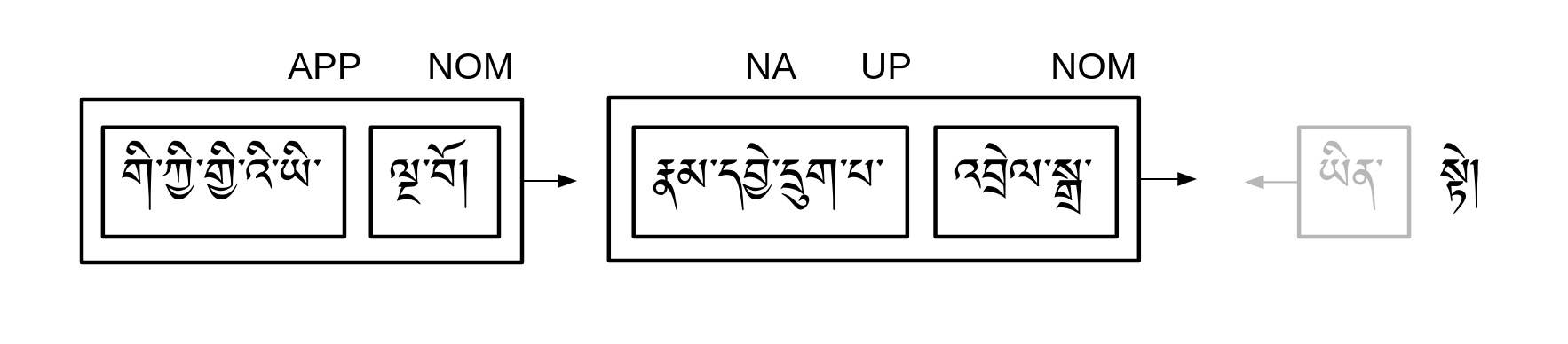
The first half of the line above (སུ་རུ་ར་དང་དུ་ཏུ་ན) is a simple list. It tells you the six la-group particles. This is the subject of the linking verb ཡིན་ that terminates the sentence. དང་ in the middle of a list means and. Remember that དང་ can go anywhere in a list or can be omitted. It's in the middle here simply to fill the meter and because it sounds good.
ལ་དོན is a short word that means la equivalents. དོན་ means meaning, thus ལ་དུན་ means [same] meaning [as] la [particles]. The “la-dun” particles is the same thing as when we say the la-group particles, i.e. the six particles used for the 2nd, 4th, and 7th cases (སུ་, རུ་, ར་, དུ་, ཏུ་, and ན་).
The second half of the line above is the complement (ལ་དོན་རྣམ་པ་དྲུག་) plus the verb itself (ཡིན་) and a continuative (ཏེ). ལ་དོན་རྣམ་པ་དྲུག་ is a noun-phrase. དྲུག་ is clearly an adjective for ལ་དོན་རྣམ་པ་. I think we can assume an omitted 6th between ལ་དོན་ and རྣམ་པ་ → ལ་དོན་གྱི་རྣམ་པ་.
ལ་དོན་གྱི་རྣམ་པ་དྲུག་
NOUN-6th-NOUN-ADJECTIVE
la-equivalents – 6th case – type – six
Taking the 6th case to be a type-connective, we have a noun phrase that means six types [of the type] la-equivalent. Or, less literally: six types [with same] meaning as ལ་
¶ Looking at lines 16 & 17:
རྣམ་དབྱེ་ གཉིས་པ་ བཞི་པ་ དང་། བདུན་པ་ དེ་ཉིད་ དུས་ ལ་ འཇུག །
At the time of [declining words in] the second, fourth, and seventh [case] [as well as] identity and time, the case marking particles are affixed.
རྣམ་དབྱེ་ declension or case
གཉིས་པ་ second
བཞི་པ་ fourth
དང་ and
བདུན་པ་ seventh
དེ་ཉིད་ (sometimes we translate this as identity)
དུས་ time
ལ་ case marking particle
འཇུག class V verb, affix, apply, put
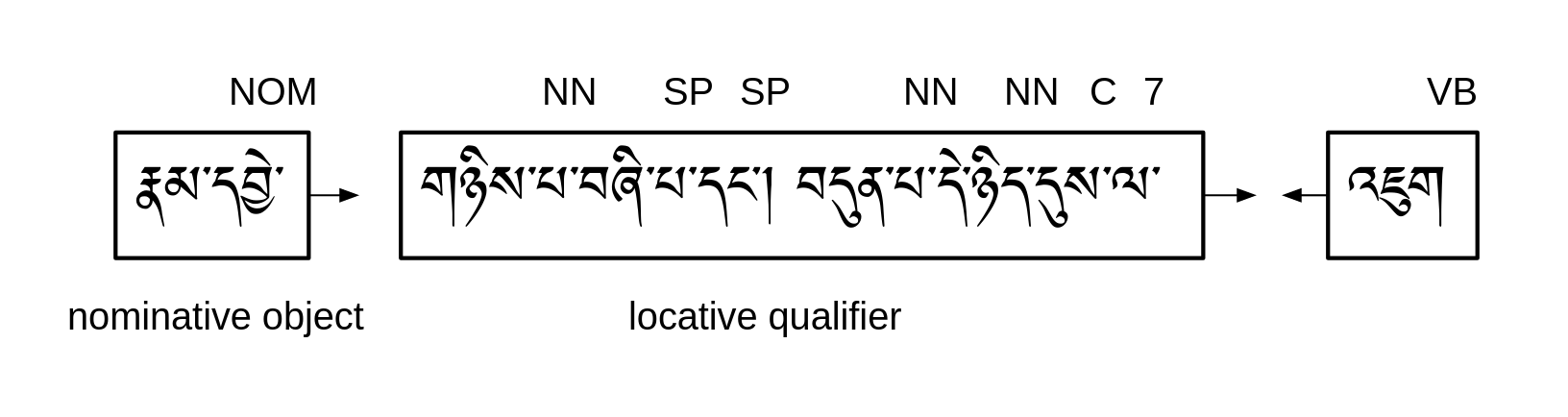
The verb of this sentence, འཇུག་, is a very common verb that has two different meanings: (1) a class II usage that means enter, engage (in), or practice, and (2) a class V usage that means place, put (in), motivate, or apply. In this case it is the second usage, the class V verb that means place, apply, or affix. The agent of the class V agentive-nominative verb (agent in the 3rd / agentive case, object in the nominative case), the peron or thing that is doing the affixing, is unstated. It is a general statement, [one] affixes. What does one affix? The object in the nominative case, རྣམ་དབྱེ་, which is the Tibetan word for case or declinsion. In this case it means the six ལ་དོན་ case marking particles.
The middle of the sentence (the bulk of the words) is a long noun phrase list marked by a 7th-case locative of time (གཉིས་པ་བཞི་པ་དང་། བདུན་པ་དེ་ཉིད་དུས་ལ་). This whole phrase is a qualifier that tells us when one should affix the case marking particles. At what time? At the time of the 2nd, 4th, and 7th cases, as well as when time or identity constructions are used.
¶ Verses 23-28
གི་ཀྱི་གྱི་འི་ཡི་ལྔ་བོ། རྣམ་དབྱེ་དྲུག་པ་འབྲེལ་སྒྲ་སྟེ། 23-24
ད་བ་ས་ཀྱི་ག་ང་གི། ན་མ་ར་ལའི་རྗེས་སུ་གྱི། 25-26
འ་དང་མཐའ་རྟེན་མེད་མཐར་འི། རྐང་པ་སྐོང་ཚེ་ཡི་འཐོབ་བོ། 27-28
The five གི་, ཀྱི་, གྱི་, འི་ and ཡི་ are the connective case marking particles of the sixth case. Following ད་, བ་, and ས་ [use] ཀྱི་; after ག་ and ང་ [use] གི་. After ན་, མ་, ར་, and ལ་, use གྱི་; [in place of ] འ་ or where there is no final consonant at the end [use] འི་. When it is necessary to fill a line of verse, it takes ཡི་.
¶ Verses 23-24
Verses 23-24 are a subject and a complement with an omitted ཡིན་ followed by a continuative.
གི་ཀྱི་གྱི་འི་ཡི་ ལྔ་བོ། རྣམ་དབྱེ་ དྲུག་པ་ འབྲེལ་སྒྲ་ [ཡིན]་ སྟེ།
gi, kyi, gyi, 'i, yi – all five – case – six – connecting particle – [are] – continuative
The five གི་, ཀྱི་, གྱི་, འི་ and ཡི་ are the connective case marking particles of the sixth case.
གི་ཀྱི་གྱི་འི་ཡི་ the five 6th-case or connective particles
ལྔ་བོ་ all five (the བོ་ followin ལྔ་ means “all”)
རྣམ་དབྱེ་ case or declension, here meaning case [particle]
དྲུག་པ་ six
འབྲེལ་སྒྲ་ Tibetan name for the 6th case, [connecting-particle]
To parse the grammar of this sentence, first you have to realize that there is an omitted ཡིན་, then you need to decide what is the subject and what is the complement. The ཤད་ (།) gives us a hint. We can take གི་ཀྱི་གྱི་འི་ཡི་ལྔ་བོ། as the subject and རྣམ་དབྱེ་དྲུག་པ་འབྲེལ་སྒྲ་ as the complement. Remember the SUBJECT has the quality of being the COMPLEMENT. Thus གི་ཀྱི་གྱི་འི་ཡི་ལྔ་བོ། has the quality of being རྣམ་དབྱེ་དྲུག་པ་འབྲེལ་སྒྲ་.
The subject, གི་ཀྱི་གྱི་འི་ཡི་ལྔ་བོ།, is a simple list of nouns (the five case marking particles of the 6th case) in apposition to ལྔ་བོ་, which means all five.
The first part of the complement, རྣམ་དབྱེ་དྲུག་པ་, is a NOUN-ADJECTIVE pair, with six being an adjective for case/declension.
Notice that sometimes numbers following a noun are adjectives but when they follow a list of nouns they are in apposition. Above, རྣམ་དབྱེ་དྲུག་པ་ is a NOUN-ADJECTIVE noun phrase, with six modifying case to tell us the number of cases. However, frequently we see numbers following lists of nouns, such as ཀ་བུམ་གཉིས་ (pillar and pot, the two) or སེམས་ཡིད་རྣམ་པར་ཤེས་པ་གསུམ་ (mind, intellect, and consciousness, the three). Or in the subject above: གི་ཀྱི་གྱི་འི་ཡི་ལྔ་བོ། In these cases, the number is not an adjective but is in apposition to the nouns in a list.
The only piece left to decide is the relationship between རྣམ་དབྱེ་དྲུག་པ་ and འབྲེལ་སྒྲ་. Our choices are either (1) apposition, or (2) an omitted 6th case. Looking at Hackett's translation (of the sixth case), he clearly went with the omitted sixth case. Would apposition work? This question comes down to what we understand the relationship between རྣམ་དབྱེ་དྲུག་པ་ and འབྲེལ་སྒྲ་ to be. Is འབྲེལ་སྒྲ་ a type of རྣམ་དབྱེ་དྲུག་པ་? Is འབྲེལ་སྒྲ་ composed of རྣམ་དབྱེ་དྲུག་པ་? Does འབྲེལ་སྒྲ་ possess རྣམ་དབྱེ་དྲུག་པ་? Or are འབྲེལ་སྒྲ་ and རྣམ་དབྱེ་དྲུག་པ་ more equal in status, both referring to the same object, but the one providing a more specific denotation than the other?
The first three would be examples of a 6th-case connective. The last would be apposition. Apposition is like saying George, the king or Sera, the monastery. Both nouns refer to the same thing but the second noun specifies or provides more information. The dictionary definition is “a relationship between two or more words or phrases in which the two units are grammatically parallel and have the same referent.”
Apposition feels like it almost fits here. Read the translation below, interpreting the noun phrase as apposition.
The five གི་, ཀྱི་, གྱི་, འི་ and ཡི་ are the འབྲེལ་སྒྲ་, that is to say, the six case marking particles.
But not quite, really. My feeling is that this is a 6th-case of the type compositional. The འབྲེལ་སྒྲ་ is composed of the six case marking particles. It's not a type (འབྲེལ་སྒྲ་ is not of the type རྣམ་དབྱེ་དྲུག་པ), and certainly it's not possessive (རྣམ་དབྱེ་དྲུག་པ do not possess འབྲེལ་སྒྲ་). If you want to read more about the 6th case and the different flavors, see the wiki page.
We can read the noun phrase with an omitted 6th.
རྣམ་དབྱེ་དྲུག་པ [འི་] འབྲེལ་སྒྲ་
NOUN-ADJECTIVE-6th-NOUN
So here's our diagram.